In this early landscape George Rodrigue depicts Louisiana in a way that calls to mind 19th century Impressionism. The landscape, rendered in loose, visible brush strokes, gives the viewer a sense of the land rather than an exact representation of it. Rodrigue’s inclusion of a pirogue speaks to his interest in how the once inhospitable land of south Louisiana became a traversable home for Cajun people. The light source in Acadiana Oaks comes from behind the oak trees. Like the Impressionists before him, in his work, Rodrigue captures the way the human eye sees and experiences light. Acadiana Oaks #3 is an exemplary example of Rodrigue’s landscape painting.

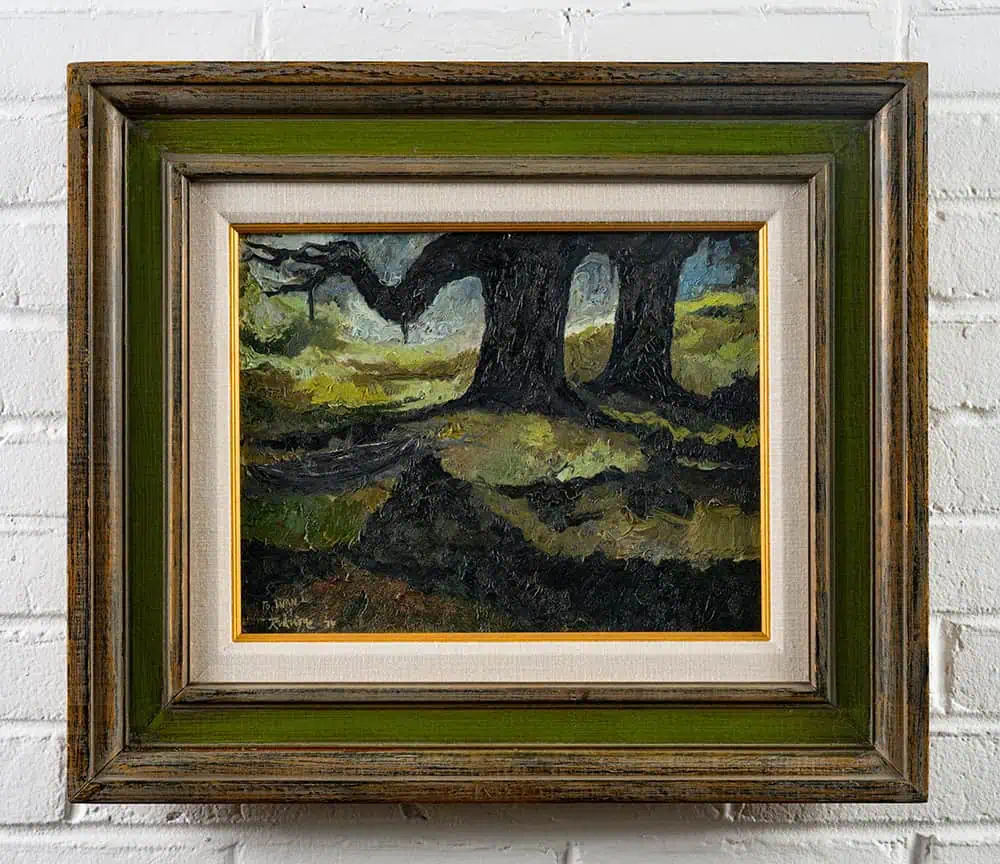

In this early landscape George Rodrigue depicts Louisiana in a way that calls to mind 19th century Impressionism. The landscape, rendered in loose, visible brush strokes, gives the viewer a sense of the land rather than an exact representation of it. Rodrigue’s inclusion of a pirogue speaks to his interest in how the once inhospitable land of south Louisiana became a traversable home for Cajun people. The light source in Acadiana Oaks comes from behind the oak trees. Like the Impressionists before him, in his work, Rodrigue captures the way the human eye sees and experiences light. Acadiana Oaks #3 is an exemplary example of Rodrigue’s landscape painting.