A prisoner in Port Arthur, Texas wrote a song based on the Cajun legend “Jolie Blonde” in the 1920s. It tells the story of a pretty blonde woman who left her Cajun lover for someone else. Over the years, the song has developed into the Cajun anthem.
Rodrigue painted Jolie Blonde, meaning “pretty blonde,” more than one hundred times, beginning in 1974 and continuing for the rest of his life. He used a dozen or more models over year the years, placing Jolie Blonde at first in bayou setting and later in more contemporary and even abstract environments.
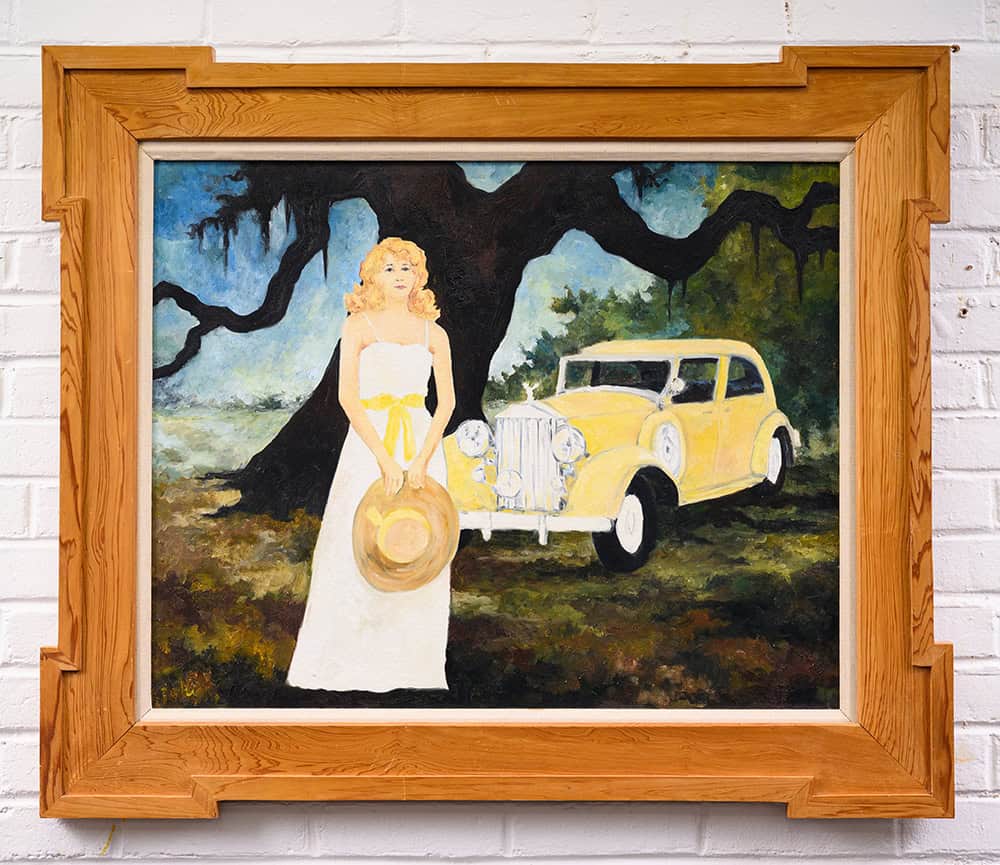
In The Yellows Rolls of Jolie Blonde, Rodrigue blends the organic with the man-made, in a fabricated scene that relates the iconic Cajun beauty to the iconic English luxury automobile. In his typical style, all elements in the painting hold equal importance, including the oak tree, as well as the shape that it’s branches form with the sky. While the car’s wheels ground it into the land, Jolie floats like a ghost, framed by the oak tree behind her.


A prisoner in Port Arthur, Texas wrote a song based on the Cajun legend “Jolie Blonde” in the 1920s. It tells the story of a pretty blonde woman who left her Cajun lover for someone else. Over the years, the song has developed into the Cajun anthem.
Rodrigue painted Jolie Blonde, meaning “pretty blonde,” more than one hundred times, beginning in 1974 and continuing for the rest of his life. He used a dozen or more models over year the years, placing Jolie Blonde at first in bayou setting and later in more contemporary and even abstract environments.
In The Yellows Rolls of Jolie Blonde, Rodrigue blends the organic with the man-made, in a fabricated scene that relates the iconic Cajun beauty to the iconic English luxury automobile. In his typical style, all elements in the painting hold equal importance, including the oak tree, as well as the shape that it’s branches form with the sky. While the car’s wheels ground it into the land, Jolie floats like a ghost, framed by the oak tree behind her.