George Rodrigue’s early depictions of Mardi Gras captured the day’s revelry as it was celebrated in Lafayette and other Cajun towns. He found inspiration in the Cajuns dressed up as harlequins and clowns for the day, creating paintings that featured those figures in brightly colored scenes amongst floats and banners. In this painting, Rodrigue draws his focus to a single figure. This figure wears a mostly white clown costume, offsetting the darkness of Rodrigue’s signature oak tree-dominant landscape. The white of the figure’s costume calls to mind Rodrigue’s earliest depictions of Cajuns, who he often painted wearing white to symbolize the hope they held for their future in Louisiana. Cajun Clown showcases Rodrigue’s ability to make work that is at once solemn and blithe.

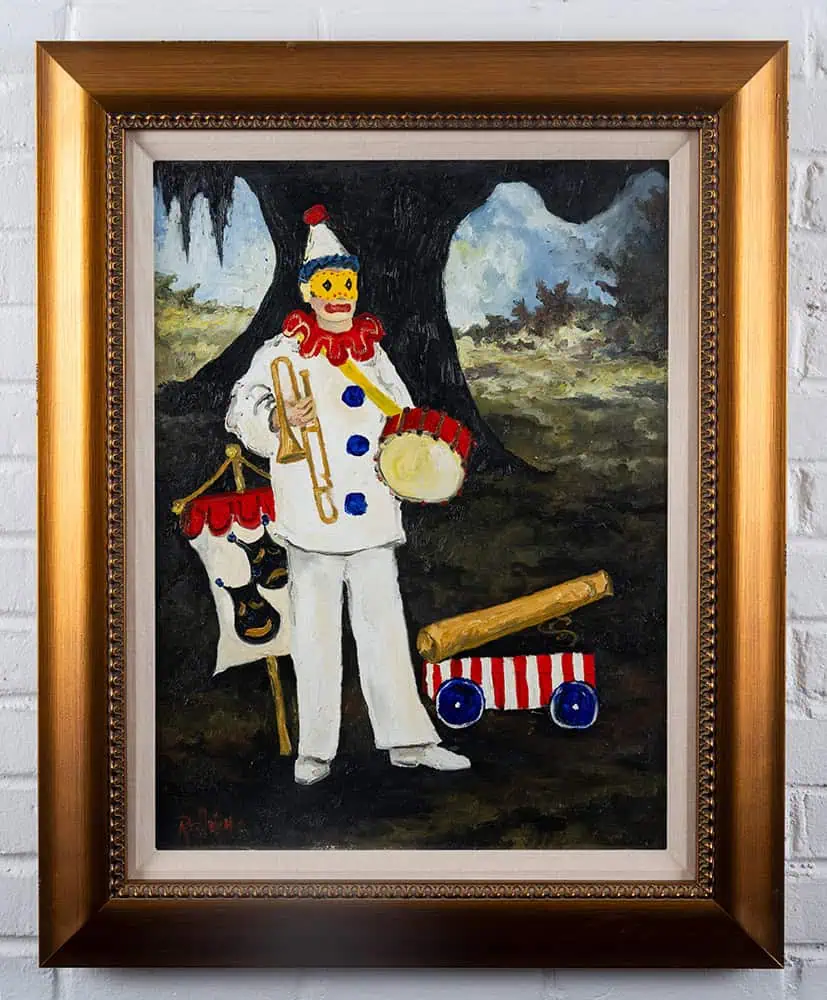

George Rodrigue’s early depictions of Mardi Gras captured the day’s revelry as it was celebrated in Lafayette and other Cajun towns. He found inspiration in the Cajuns dressed up as harlequins and clowns for the day, creating paintings that featured those figures in brightly colored scenes amongst floats and banners. In this painting, Rodrigue draws his focus to a single figure. This figure wears a mostly white clown costume, offsetting the darkness of Rodrigue’s signature oak tree-dominant landscape. The white of the figure’s costume calls to mind Rodrigue’s earliest depictions of Cajuns, who he often painted wearing white to symbolize the hope they held for their future in Louisiana. Cajun Clown showcases Rodrigue’s ability to make work that is at once solemn and blithe.